Athlete – Thoroughbred Racing
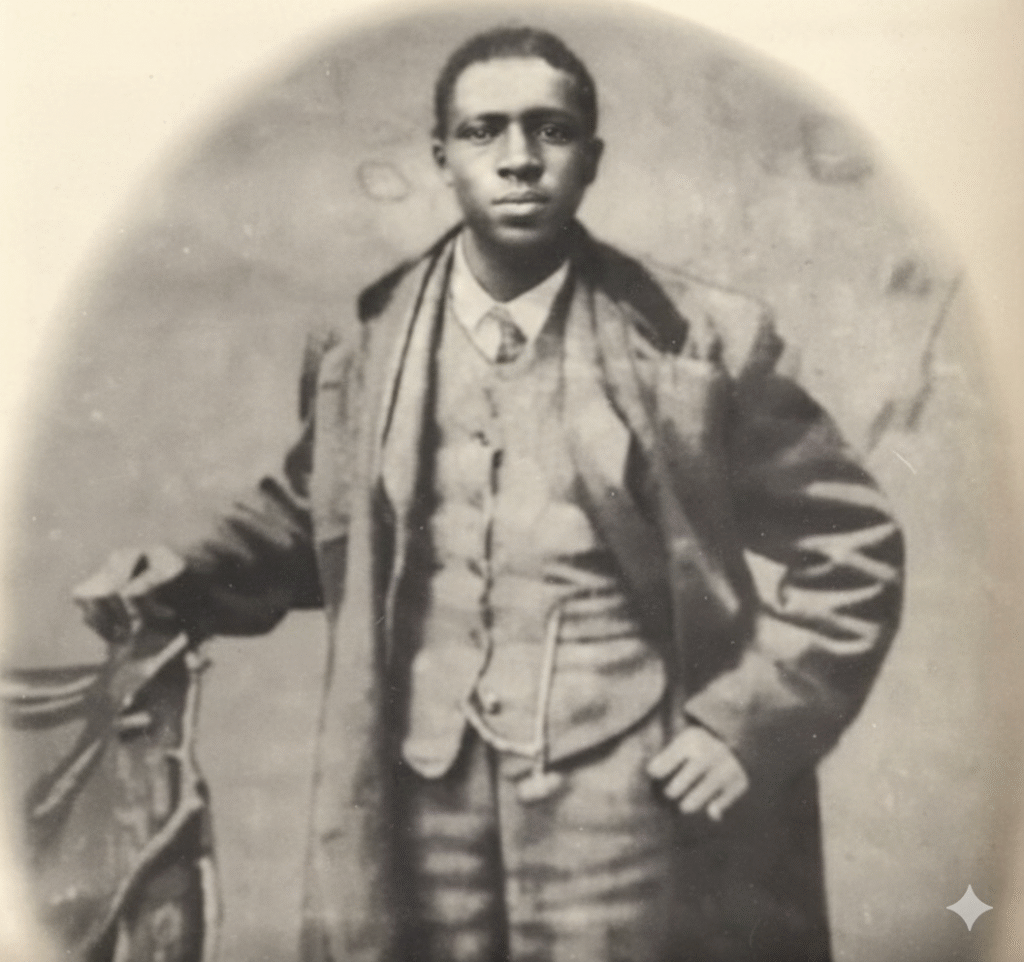
Mr. Oliver Lewis made his indelible mark on the worldwide sports culture by winning the first-ever Kentucky Derby on May 17, 1875, at the Louisville Jockey Club racetrack, now known as Churchill Downs. Born in Woodford County in 1856 to parents Goodson and Eleanor Lewis, he was one of 13 black jockeys in the field of 15 riders. At the age of 19, Mr. Lewis rode Aristides to a two-length victory over Volcano in front of 10,000 Derby spectators. He earned $2,850 (the equivalent of approximately $78,600 today) in prize money for his employer and the horse’s owner, H. Price McGrath of McGrathiana Farm near Newtown Pike in Lexington. Renowned African-American trainer Ansel Williamson, who also worked at McGrathiana Farm, trained Aristides. The winning time of two minutes, 37.75 seconds set a new American record for races of 1-½ miles at the time. The Derby is now run over a length of 1-¼ miles.
After his historic win at the inaugural Kentucky Derby, Mr. Lewis rode Aristides to a second-place finish in the Belmont Stakes, the third race in what is now America’s Triple Crown of racing. After that extraordinarily successful season, Mr. Lewis never again rode at Churchill Downs but is believed to have visited the storied racetrack for the 33rd running of the Kentucky Derby in 1907.
Prior to his historic win at Churchill Downs, Mr. Lewis honed his skills at the Kentucky Association Track, which was located at the site of the former Bluegrass-Aspendale Housing Projects near Fifth and Race streets in Lexington’s East End. The Kentucky Association Track closed in 1933 and was torn down in 1935. In 1936 the Keeneland Association opened its race course on Versailles Road and revived the historic races that originated at the old track: the Blue Grass Stakes, the Ashland, Phoenix Stakes, the Ben Ali, and the Futurity.
Mr. Lewis’s career as a jockey was short-lived. The success of Black jockeys and the lucrative salaries they were being paid raised the ire of the white establishment. By the early 1900s, Black jockeys had been forced out of the Thoroughbred racing industry due to Jim Crow segregation laws and racism. African American jockeys found other less glamorous and less provident jobs within the industry, or they left America to race in Europe, Russia, and England.
After his racing career was cut short by the intimidation and violence toward Black jockeys, Mr. Lewis became a bookmaker, which was legal at the time, and developed a method for handicapping races. His groundbreaking charts eventually developed into what clearly resembles Daily Racing Form past performance charts which are used by horseplayers and fans around the world.
Mr. Lewis eventually married the former Lucy Wright at Mt. Gilead Baptist Church on Jacks Creek Pike in rural Lexington in 1881. The couple lived on Ballard Street near downtown Lexington and had 11 children, six of whom lived to adulthood. At the end of his racing career, Mr. Lewis and his family moved to Cincinnati, where he worked for the Cincinnati Street Department and continued working as a bookmaker.
Mr. Lewis died in 1924 and was buried in his family’s plot in African Cemetery No. 2 on Seventh Street in Lexington. In 2010, the Newtown Pike extension was named “Oliver Lewis Way” in his honor. The extension runs from South Broadway to the intersection of West Main Street and Newtown Pike, which leads to the former McGrathiana Farm near the Interstate 64/75 interchange. Now named Coldstream Research Campus, McGrathiana Farm is where Mr. Lewis honed his craft and became one of America’s premier jockeys in the late 19th Century. The University of Kentucky Class of 2011 funded a historic marker that was installed at Coldstream in Mr. Lewis’s honor.